
Understanding Immune Disruption and Chronic Symptoms
Dr. Kyle Warren
Meghan Feir Walker
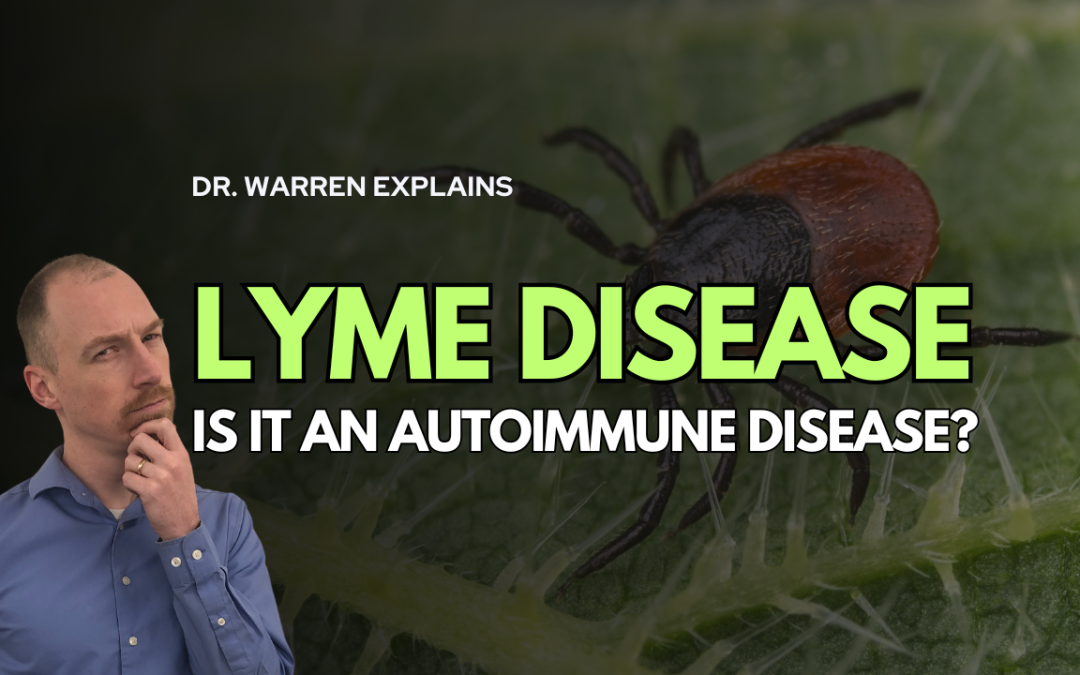
Is Lyme disease an autoimmune disease? How can you tell if you’re dealing with Lyme, an autoimmune condition, or a combination of both?
With so many overlapping symptoms, particularly with inflammation, it can sometimes be hard to distinguish between autoimmune diseases and Lyme disease. However, Lyme disease is not an autoimmune disease; it’s a bacterial infection caused by Borrelia burgdorferi and other strains of Borrelia.
Lyme disease is called “the great imitator” for a reason, but there are some key indicators in immune testing that can be observed that can help you determine which kind of disease you’re dealing with and what to do about it.

What happens to the immune system with Lyme disease?
Lyme disease/chronic Lyme disease is triggered by a bacterium called Borrelia burgdorferi and other species of Borrelia. When Lyme becomes chronic, whether a person has been previously “treated” for Lyme with antibiotics or not, chronic immune dysfunction begins to occur after it’s past the acute phase of the illness. The low-grade immune dysfunction that begins to occur causes chronic inflammation.
Lyme disease and inflammation go hand in hand, and this chronic inflammation can make it appear to be an autoimmune reaction and illness, even when it’s not.
When the immune system stays activated too long
Autoimmunity describes when your immune system starts accidentally confusing parts of your own body as an intruder, like a virus or bacteria, and starts attacking itself. Because your immune system is attacking your own body, autoimmune diseases create a type of chronic inflammation.
While chronic Lyme disease results in chronic inflammation, this is a different process than what’s occurring with autoimmunity because with Lyme, your body isn’t typically attacking itself.
With Lyme, most people want to focus on how to kill it, the different forms it enters, etc. However, one of the key components I try to talk about with my patients is that Lyme creates immune dysfunction. From past research, we know it does major damage to the immune system by weakening natural killer cells and CD57 cells.
But wait, there’s more! An estimated 93% of people with chronic Lyme/post-treatment Lyme disease syndrome are not only facing a Lyme infection, but multiple other tick-borne illnesses called “co-infections.” Each one of the co-infections, such as Babesia, Bartonella, Anaplasma, Rickettsia, etc., weakens another part of the immune system. When you have Lyme plus co-infections, the immune dysfunction is rampant on multiple levels. You can get B-cell or adaptive immune system suppression, TH17 cell suppression, nitric oxide problems, and macrophage problems, to list a few of the issues. It’s no wonder that having Lyme and co-infections results in chronic inflammation and a chronic illness. Your immune system doesn’t get a break.
Earlier this year, in 2025, researchers from Montana State began trying to observe what the immune system undergoes when infected with Lyme bacteria. This is to more thoroughly understand the process and how Lyme circumvents the immune system in order to establish this long-term, chronic infection. This is a major aspect of Lyme disease that doesn't get talked about enough, so getting more information on this process is exciting.
When your immune system is activated, it’s supposed to kill the enemy intruder, win the battle, and go back to a calm state. But with chronic Lyme, the immune system can be activated in perpetuity, leading to chronic symptoms like headaches, neck pain, muscle pain, fatigue (including post-exertional fatigue), a plethora of neurological symptoms (because Lyme likes the nerves), and many other life-altering symptoms.

The overlap between Lyme symptoms and autoimmune conditions
Beyond the definitions, there are some notable differences between Lyme disease and autoimmune diseases.
When we’re testing the immune system by running lymphocyte panels, some of the biggest players in autoimmune disease are the T-regulatory cells. T-regulatory cells are extremely important for immune function. We call them the mom of the immune system. When T-reg cells become low, autoimmunity tends to develop. As you lose the regulators, the other parts of the immune system start to act with less control, which can cause your immune system to attack your own body.
One of the key things we try to accomplish with autoimmune disease patients is supporting and boosting their T-regulatory cells. However, this isn’t a common pattern of immune dysfunction with Lyme infections. In most cases of chronic Lyme patients, we measure the T-reg cells, and they’re functioning well.
A large percentage of T-regulatory cells reside in the gut and play a major role in gut health, so when addressing autoimmunity, you get a big bang for your buck by supporting and repairing gut health. It’s imperative to heal the gut when trying to regulate an autoimmune disease because gut problems can be a major source of inflammation.
While healing the gut, eating healthy food, and getting good nutrients are important parts of healing people, we don’t place the same emphasis on the importance of this for Lyme disease patients as we do for those with autoimmune diseases. Once again, this is because T-reg cells are often healthy in Lyme patients. In Lyme cases, typically, it’s the natural killer cells and other parts of the immune system that aren’t functioning well.
Can Lyme contribute to autoimmune conditions?
In our clinic, a 10-15% subset of our Lyme patients are dealing with an autoimmune disease as well as Lyme, and, most often, other co-infections. Whether it’s psoriasis, rheumatoid arthritis, lupus, or another autoimmune condition, these processes can be tracked. Lyme and these other infections can trigger autoimmune conditions, exacerbate symptoms, and amplify the autoimmune process.
In cases like these, we want to get rid of the Lyme and co-infections and help regulate and reestablish immune balance.
Whether your symptoms are coming solely from Lyme and co-infections or you have Lyme, co-infections, and autoimmunity, getting rid of Lyme is a big part of healing the autoimmunity and helping the immune system regain control.
If you don’t have Lyme and co-infections and your symptoms are solely from an autoimmune disease, many other factors can cause additional inflammation. Some of the biggest culprits are chemical toxicity, food allergies/sensitivities/intolerances, gut dysbiosis, and others. To help those with autoimmune conditions heal, we look through the patient’s history and test potential sources of inflammation before working on removing those sources.
When we're trying to reestablish immune balance from a functional medicine standpoint, we want to make sure we're not just using immune-suppressing techniques. Right now, our colleagues in medicine often try to suppress the immune system with medications when working with autoimmune issues. While this can be used for short-term relief, suppressing your immune system for a long period of time can have negative consequences. You're going to get better long-term results by finding the sources of inflammation and removing them, at least for a time, while your immune system has a chance to regulate.
Although I am primarily working with Lyme patients, we still run autoimmune panels to make sure we know exactly what we’re dealing with. When you’re positive for autoimmunity, we want to discover what other inflammation drivers may be at play, such as gut health, hormonal imbalances, chemical toxicity, etc. We want to address any sources of inflammation that are triggering the autoimmunity.
Whether you have Lyme, autoimmunity, or both, you can be healthy again. Just keep in mind that every additional factor contributing to immune dysfunction slows down how quickly you’re able to heal.
Take control of your health: A functional health perspective on immune imbalance
To recap the main points of this article:
- Autoimmunity describes when your immune system creates chronic inflammation as it attacks certain parts of the body, mistaking them as an enemy.
- Lyme is different than an autoimmune disease, but Lyme can trigger autoimmunity, cause symptoms that resemble autoimmune conditions, and wreak havoc in the body along with autoimmune diseases.
- Lyme bacteria cause chronic inflammation, and Lyme disease is often accompanied by other tick-borne co-infections that also cause immune dysfunction.
- Lyme causes more problems with natural killer cells, while autoimmune conditions impact T-regulatory cell health.
- In order to address both Lyme and autoimmunity, we need to work on balancing the immune system.
- You can also learn more about Lyme and autoimmunity in our other article.
In our clinic, we carry out immune, cytokine, and lymphocyte panels to understand the type of dysfunction and chronic inflammation occurring in your immune system.
If you have unexplained symptoms and don’t know whether they are caused by autoimmunity or chronic Lyme/PTLDS and other tick-borne co-infections, we would love to help you in our clinic heal and live a healthy life.
If you’re ready to take control of your health, reach out to our clinic and set up your free consultation with one of our team members. They will go through your history, symptoms, and next steps with you.
Discovering what your body is fighting is the first step in recovering. You can get better from Lyme, co-infections, and autoimmunity!
To learn more about Lyme disease and co-infections, check out our Lyme page and blog.
Watch the video
Click here or the image below to watch the accompanying video.
Follow us to learn more
If you found this information helpful, consider sharing it with friends. Don’t forget to follow us on Facebook, Instagram, and YouTube, and sign up for our weekly Restorative Health Solutions newsletter that features the topic of each week.
